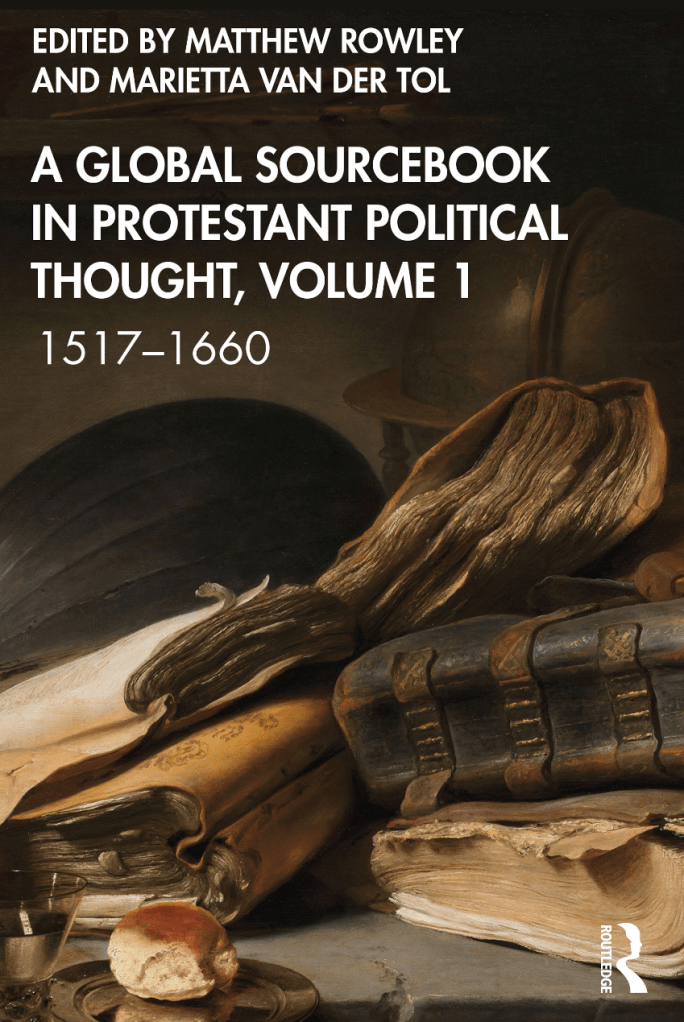
A Global Sourcebook in Protestant Political Thought, 1517–1660 (Routledge, 2024)
Buy US / UK
“This is a brilliant and welcome collection of 200 judiciously chosen primary texts framed by authoritative and accessible introductions by leading scholars. Here in one well-edited volume, specialists and new readers get vivid illustrations of the enduring fundamentals of early modern Protestant political thought and their ample local variations and applications. Religious insiders and secular historians alike will be surprised to learn how prescient and prophetic Protestants have been in creating and reforming many of the political ideas and institutions still in place in the West today.”
—John Witte, Jr., Center for the Study of Law and Religion, Emory University, USA
“What we call ‘Protestantism’ both is and was a very various phenomenon, a variety often lost to caricature and homogenizing, just-so surveys based on a narrow range of historical sources. This volume captures convincingly the sheer diversity of political arguments and approaches that passed under the ‘Protestant’ label in the early modern period, not only in Northern, but also Southern and Eastern Europe, as well as North America and the near East. The primary sources and commentaries collected here offer an unrivaled resource for students and scholars to explore this critical moment—and movement—in global intellectual history, the legacies of which continue to shape our world in important and often unexpected ways.”
—Teresa Bejan, Professor of Political Theory, University of Oxford, UK
This is a really invaluable collection of materials, demonstrating the breadth and sophistication of political theology inspired by Protestant traditions – mainstream and not so mainstream. As increasing scholarly attention is – rightly – given to the insights of Catholic Social Teaching, it is more than ever important to have a clear sense of what other Christian bodies have to contribute to our current and urgent debates on the foundations of political ethics.’
—Rowan Williams, Former Archbishop of Canterbury
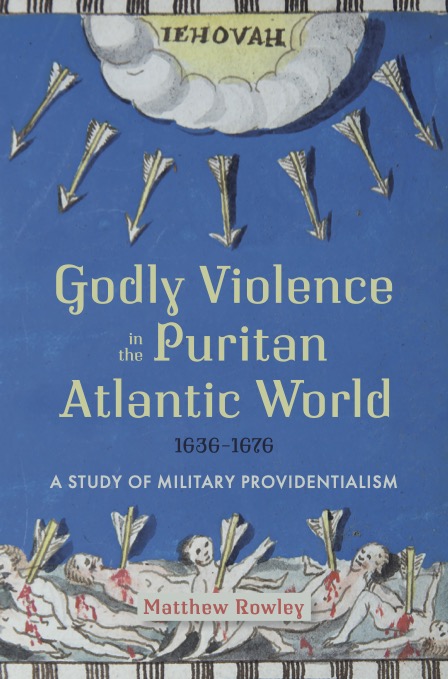
Godly Violence in the Puritan Atlantic World, 1636–1676: A Study of Military Providentialism (Boydell and Brewer, 2024)
Buy US / UK
“Godly Violence is a timely exploration of the powerful religious convictions that underpinned military conflict in the puritan Atlantic world. By probing the passionate zeal of those who fought in the name of God in seventeenth-century Britain and its colonies, Matthew Rowley’s book illuminates anew the enduring connections between theology and war.”
—Alexandra Walsham, Professor of Modern History, University of Cambridge
“Ranging across American, English, Irish and Scottish history, Matthew Rowley gives us a masterful treatment of that eternally challenging question: can religion be used to justify violence?”
—Alan Ford, Emeritus Professor of Theology, University of Nottingham
“This is a fascinating exploration of how puritans understood the role of God in war…. [T]he content is valuable for anyone interested in puritanism in the seventeenth century Atlantic world.”
—Francis Bremer, New England Quarterly
“[A]n important and timely work…. Rowley is to be praised for presenting such a clear analysis of how the concept was employed and understood at key events in the seventeenth century. Rowley has a mastery of the theological foundations of these discussions and has carried out extensive research using a mixture of printed and archival sources. His insightful analysis and clear presentation of his arguments will ensure a wide audience both among students and established researchers.”
—Alex Beeton, Renaissance Studies
“Rowley has produced a thought-provoking and engaging monograph that will be of considerable interest to historians studying the complex relationship between religion and violence in the early modern world.”
—William White, American Historical Review
“This important study synthesises existing scholarship while engaging more deeply with primary sources than the works it builds upon. Matthew Rowley provides a multifaceted analysis of key episodes in Atlantic history, examining Puritan interpretations of violence and providence. … [This] the book contributes significantly to the understanding of early modern anglophone Reformed thought on violence and war.” —R. Scott Spurlock, English Historical Review.
God, Religious Extremism and Violence (Cambridge University Press, 2024)
Buy US / UK
“Writing with commendable clarity, Matthew Rowley’s insightful and lively new book provides a thoughtful engagement with the ever-vexed issue of religion and violence. In particular, the ‘three-dimensional view of conflict’, which he here presents, provides a strikingly novel and valuable contribution to the debate, which deserves wide circulation and engagement. If contemporary narratives of religious violence in the media and beyond are not disrupted by this publication, it will not be Rowley’s fault.”
— Revd Helen Paynter PhD, Director of the Centre for the Study of Bible and Violence

Trump and the Protestant Reaction to Make America Great Again (Routledge, 2020)
Buy US / UK
Audible US“Rowley … points us to something better, namely a vision to Make America Better that honestly accounts for America’s historic sins and successes and her future promise.”
—Judd Birdsall, Cambridge University, UK.“This compact, topical and lucidly written volume will be of interest to readers in a wide range of fields across the humanities and social sciences.”
—Philip Gorski, Yale University, USA.“This is a must for anyone who wants to truly understand the Trump era.”
—Michael McKoy, Wheaton College, USA.
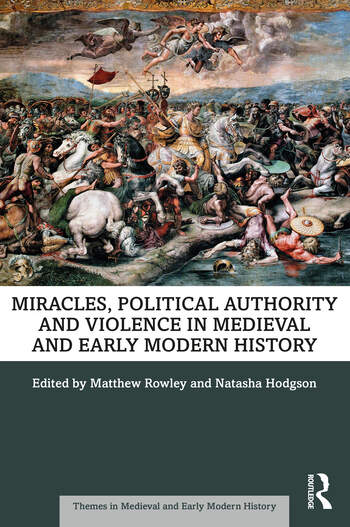
Miracles, Political Authority and Violence in Medieval and Early Modern History (Routledge, 2021)
Buy US / UK
“[T]his is a ground-breaking and thought-provoking volume, which, one hopes, will pave the way for future studies on the same subject.” —Catholic Historical Review
Contributors explore miracles, political authority and violence in Orthodoxy, Roman Catholicism, various Protestant groups, Judaism, Islam and the local religious beliefs of Pacific Islanders who interacted with Christians. The chapters are geographically expansive, with contributions ranging from confessional conflict in Poland-Lithuania to the conquest of Oceania. They examine various types of conflict such as confessional struggles, conversion attempts, assassination and war, as well as themes including diplomacy, miraculous iconography, toleration, theology and rhetoric. Together, the chapters explore the appropriation of accounts of miraculous violence that are recorded in sacred texts to reveal what partisans claimed God did in conflict, and how they claimed to know. The volume investigates theories of justified warfare, changing beliefs about the supernatural with the advent of modernity and the perceived relationship between human and divine agency. It examines how historical beliefs about the supernatural were used to justify violence, secure political authority or extend toleration in both the medieval and early modern periods.
Chapters in Books
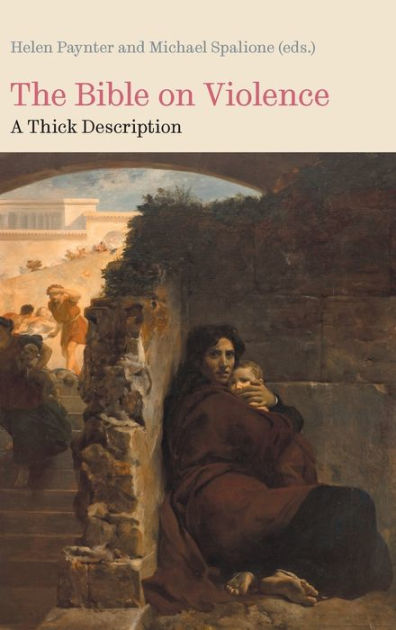
“On the Impossibility of Imitating Biblical Violence”
This chapter delves into how individuals and groups inhabit biblical texts when they justify or describe killing, showing how the biblical text is altered in the process. This chapter has three focal points: Scripture, history, and modern killing. We will first examine the most important and influential narrative in the Hebrew Bible—the exodus, wilderness and conquest—and consider whether it is humanly possible to imitate the violence recorded therein. Transitioning to reception history, we will then examine the use of the exodus narrative in describing the killing that took place after the battle of Naseby during the English Civil War. I will argue that the parliamentarians fundamentally altered the miracle claims or internalized them as they applied Scripture to their conflict. Finally, using the example of Roger Williams, I will argue that by highlighting the miracles in the biblical text one can challenge killing in the name of God and extend religious toleration.
“A New Approach to Just and Holy Warfare: The Complicated Case of Puritan Violence”
This chapter argues for complexity with regard to how scholars conceptualize the relationship between justice and holiness in conflict. If scholars search for why the godly thought their violence was holy they are in danger of misunderstanding why they thought it was just. However, if they search for why they thought violence just, they are likely to gain deeper insights into why they thought it was also holy.

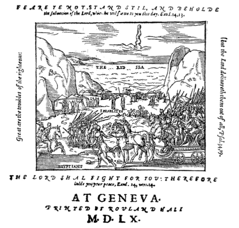
“Red Sea/Sea of Reeds in the Reformation Era”, in The Encyclopedia of the Bible and Its Reception, vol 27 (Berlin: De Gruyter, forthcoming).
This entry explores how verses that encouraged passively waiting on God for physical salvation came to be interpreted in ways that allowed for physical fighting.
 The History of Religion and Conflict